
The Italian Bread You’ve Never Heard Of —
Panini all’Olio Recipe
Emma Fontanella’s soft bread rolls—traditional Italian Panini all’olio.
About My Panini All’Olio Recipe
Panini all’olio are small Italian olive-oil rolls: golden, soft, lightly enriched, and incredibly versatile. They are less famous outside Italy than breads like focaccia or ciabatta, but in Italy they are everyday party bread: the kind of rolls you find at birthday parties, aperitivi, school lunches, and family gatherings.
This recipe uses all-purpose flour, so the rolls are easy to make without specialist bread flour. The olive oil does not make them taste strongly of oil. Instead, it softens the crumb and gives the bread a tender, almost cloud-like texture.
The rolls are excellent filled simply with mortadella, salame, prosciutto, or cheese, where the softness of the bread can really show.
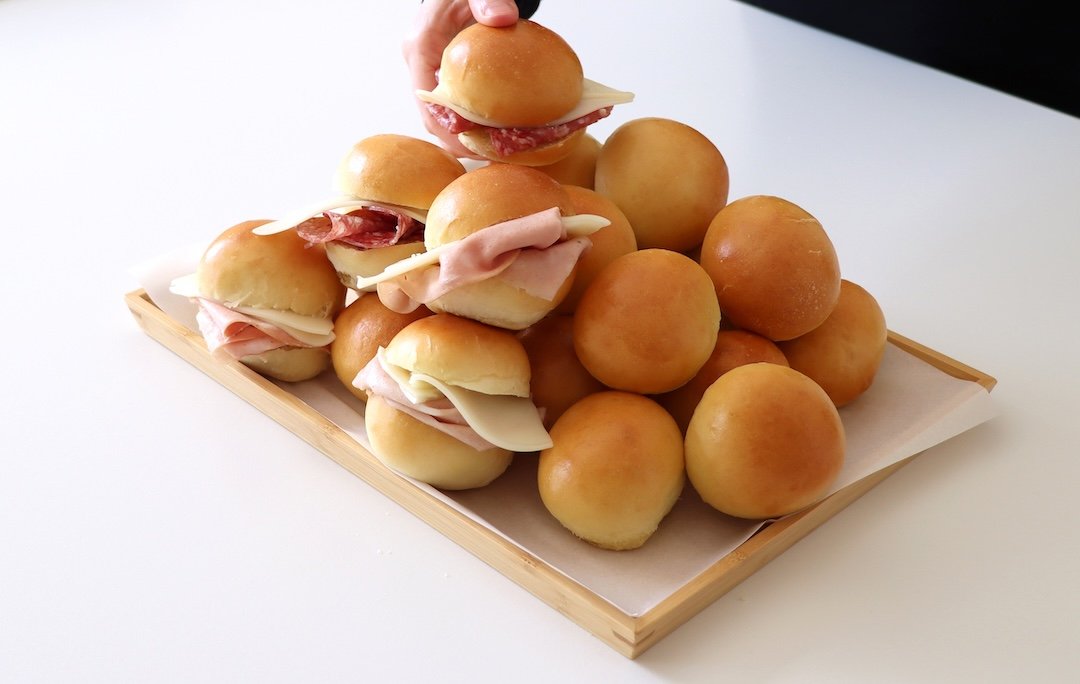
In Italy, you’ll find panini all’olio filled simply, with ham, cheese and salami. The bread is so delicious, there’s no need for extra condiments.
They also make outstanding slider buns or dinner rolls. Used for burgers, they are a delicious change from the usual potato rolls or brioche buns: soft and enriched, but with a gentle olive-oil character that works beautifully with browned beef, melted cheese, tomato, and lettuce.
I especially like them for sliders, where the balance of soft bread, savoury filling, and golden crust feels exactly right.
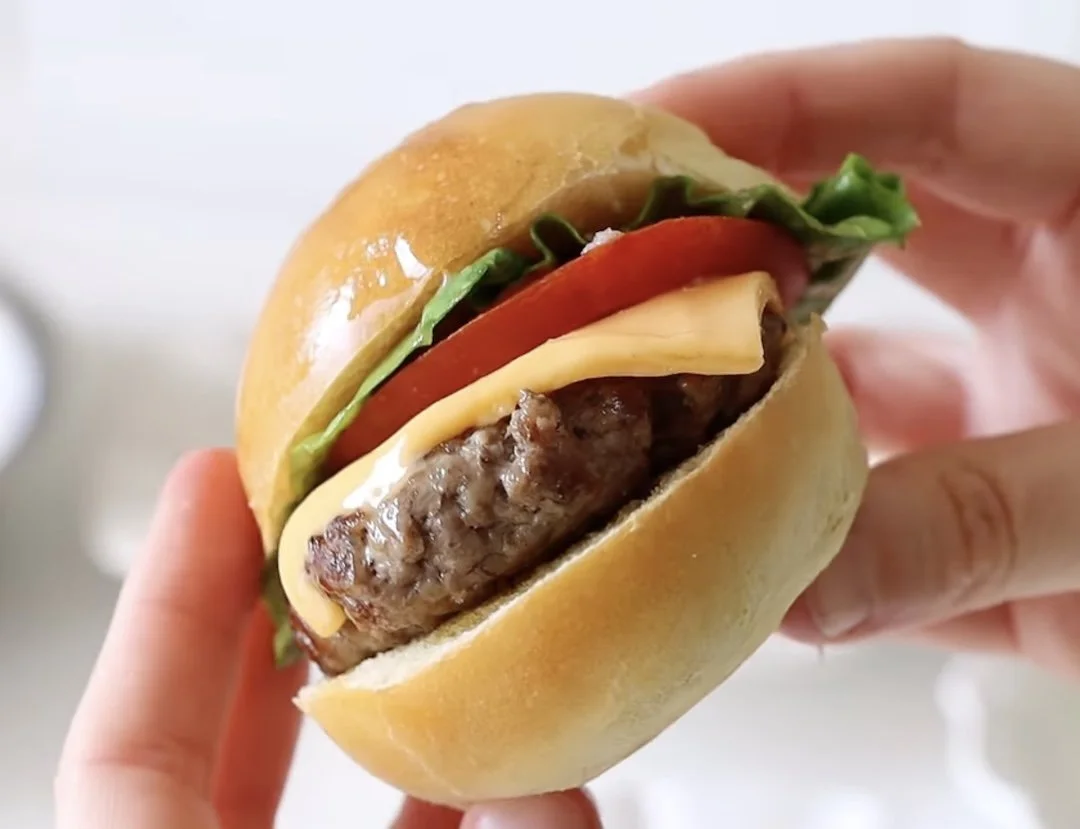
These Italian bread rolls make the most delicious burger and slider buns. When the bread is freshly baked, I don’t toast the buns. The aroma and taste of the untoasted, lightly enriched bread is incredible.
If you like this Italian bread recipe, you might enjoy my no-knead ciabatta and big-bubble focaccia. You’ll find more bread recipes in my cookbook, Simple Pleasures.
The Science of the Ingredients for Panini all’Olio
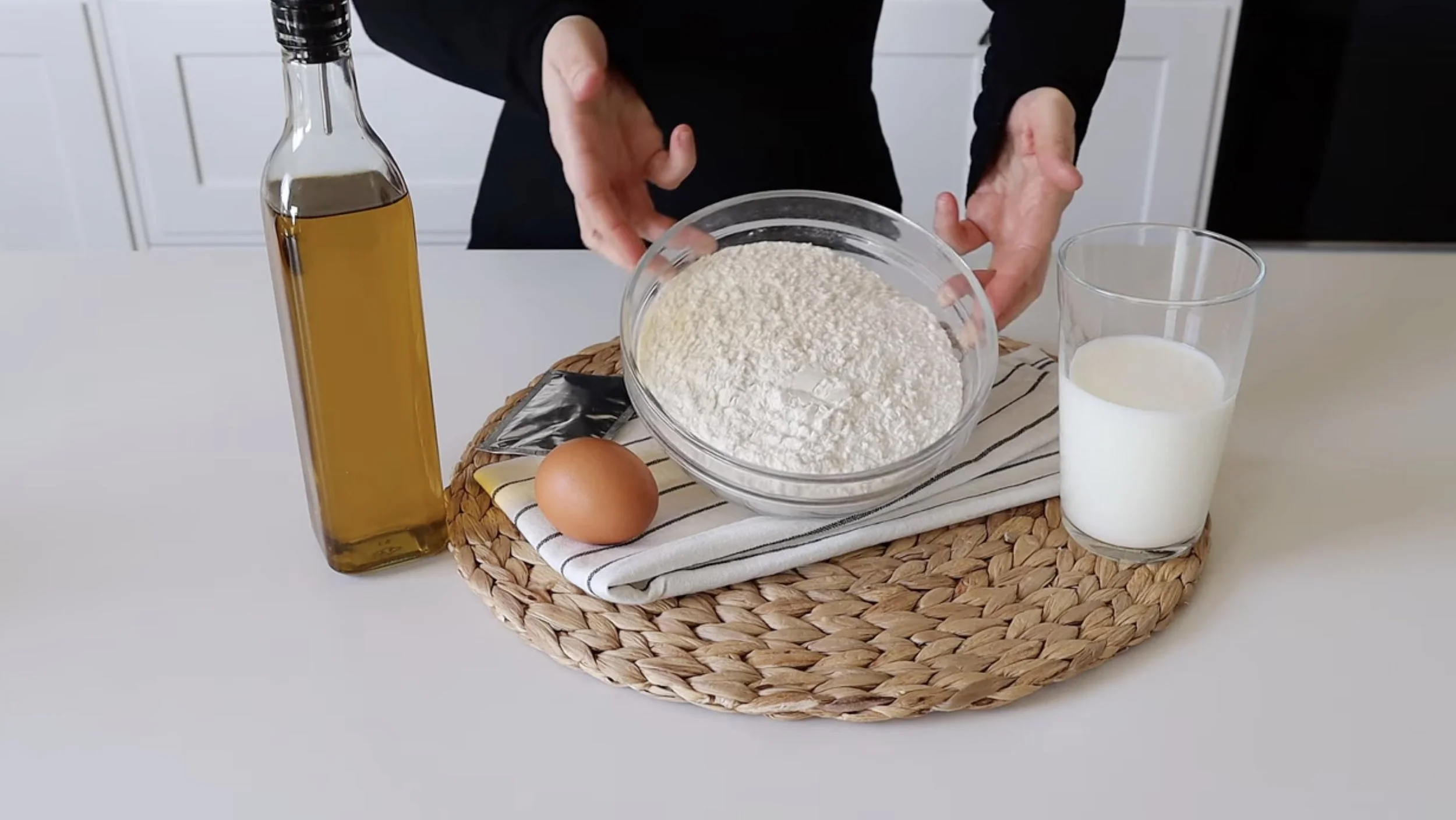
The ingredients for the panini all’olio. These bread rolls are lightly enriched with olive oil, egg and milk.
There are a few things worth understanding about the ingredients we use in these soft bread rolls, and why we use them.
The first is the flour. We use all-purpose flour here because we don’t want a really strong gluten network. This helps us achieve the soft, delicate crust we want in these rolls. If we used bread flour, we would risk creating a crisper crust.
This is a lightly enriched dough. To hydrate the flour, we use milk instead of water. We also add plenty of olive oil and an egg. Together, these help make the crumb incredibly soft by preventing the gluten network in the dough from becoming too strong. The oil also helps the bread stay soft for days.
Finally, before the rolls go into the oven, we brush them with an egg wash made from whole egg and milk. This gives the rolls their golden colour and soft sheen. The sugars and proteins in the milk and egg encourage browning, while the egg proteins set into a thin, glossy film as the rolls bake.
It’s a small step, but it makes a big difference: the rolls come out looking polished, with the soft, burnished finish you expect from this style of bread.
INGREDIENTS
For the bread rolls
¾ cup + 2 tbsp (215g) lukewarm milk, that is somewhere between 80°F and 100°F (27°C to 37°C)
2 tsp (7g) dried yeast
1 large egg
3 tbsp (40g) olive oil
3 cups (420g) all-purpose flour
1½ tsp (8g) tsp salt
1 tbsp (15g) white granulated sugar
For the egg wash
1 egg
2 tbsp milk
INSTRUCTIONS
Activate the yeast
Add the yeast to the warm milk and leave it for about 5 minutes, until foamy. This shows that the yeast is alive and active.Add the enrichments
Add the egg and the olive oil to the milk and yeast mixture. The egg adds richness, while the oil helps create the soft, tender texture.Mix the dry ingredients
In the bowl of a stand mixer, combine the all-purpose flour, salt, and sugar. The sugar is not there to make the bread sweet. It acts more like a flavour enhancer, rounding out the dough.Knead the dough
Pour the wet ingredients into the dry ingredients. Knead on medium-high speed for about 5–8 minutes, until the dough is smooth, supple, and elastic.
If you don’t want to use a stand mixer, and would rather make the dough by hand, I’d recommend a no-knead method. Just bring the dough roughly together using your hands.
Then, during the first rise in the next step, do a few rounds of stretches and folds. It’s quick and easy. Please see my no-knead Italian bread recipe for details on how exactly how to do it.First rise
Lightly oil a bowl. Shape the dough into a ball, using a little oil on your hands if needed. Place it in the bowl, oil the top lightly, cover well, and leave to rise for about 2 hours, or until doubled in size.Divide the dough
Turn out the dough and divide it into 14–15 pieces, each weighing about 1¾ oz (50g). You don’t have to be perfectly precise here, but weighing helps the rolls bake evenly.Note: Dough balls of this weight produce rolls that are the perfect size for sliders (see recipe below). If you’d like to make full-size burger buns instead, make the dough balls about 3½ oz (100g).
Shape the rolls
Roll each piece into a smooth ball, pinching the seam underneath. Place the rolls slightly spaced apart on a parchment-lined baking sheet.Second rise
Cover loosely with plastic wrap and leave to rise for about 25 minutes, or a little longer in a cold kitchen. Plastic wrap works well because it prevents the dough from drying out while resting gently on the surface.Check readiness
The rolls are ready to bake when they look puffed and gently spring back when lightly poked.Egg wash
Beat 1 egg with 2 tablespoons milk. Brush the tops of the rolls lightly with the egg wash.Bake
Bake in a preheated oven at 320°F (160°C) for 15–18 minutes, until golden. Do not overbake them, or they will dry out.Allow to cool
Let the rolls cool for about 15 minutes before slicing or filling.
Make Ahead & Freeze
Once completely cool, store the rolls in a zip-lock bag or airtight container at room temperature. They should stay soft for several days.
They also freeze well. After the rolls have cooled completely, wrap each one separately in plastic wrap. Then, place the wrapped rolls in a Ziplock bag, with as little air as possible. Then freeze.
To defrost, you can let them thaw on on the countertop. Or, you can defrost and refresh them directly in a preheated oven at 360°F (180°C) for around 5 minutes.
How to make the sliders and sandwiches
Simple Italian Sandwiches
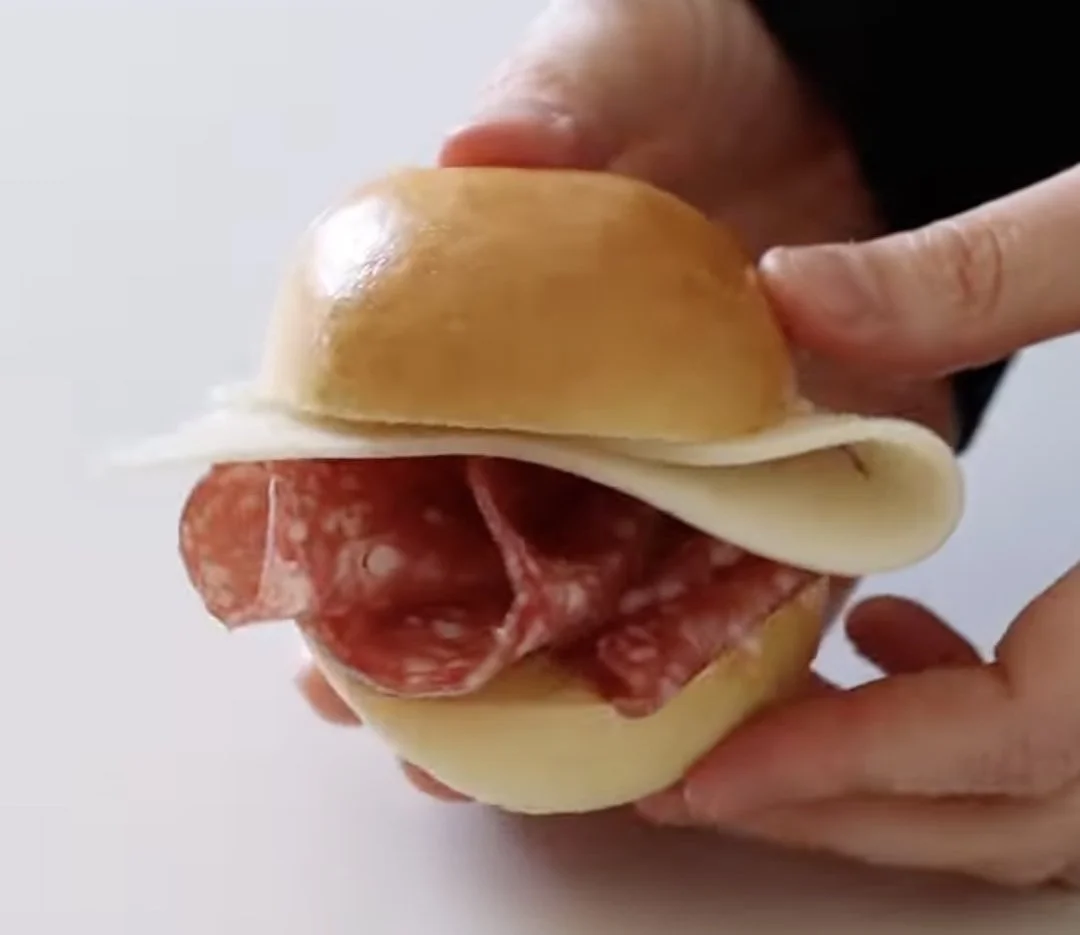
One of the bread rolls, simply filled with salami and cheese.
These rolls are soft, rich and flavourful enough that they do not need much help. Slice them open and keep the fillings simple: mortadella and cheese, salami and cheese, prosciutto, cheese and tomato, or other cured meats with a mild cheese.
Because the bread itself is soft and enriched, there is no need for mayonnaise, mustard, or heavy condiments. The bread and filling are enough.
Stainless-steel Slider Patties
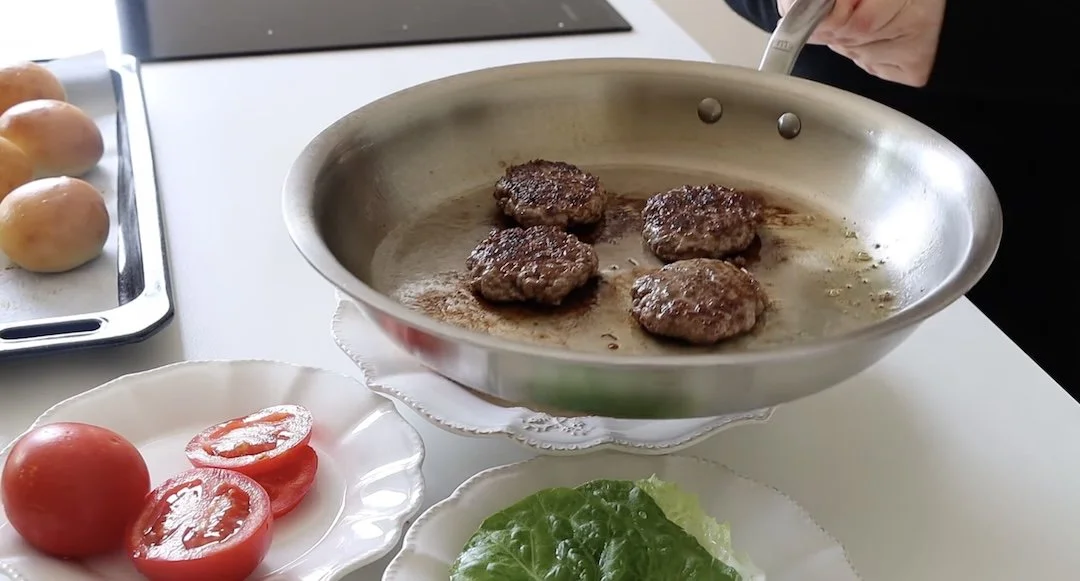
I like to use a stainless steel pan for cooking burger patties. It allows the development of an exceptional, flavorful crust on the patties.
For the slider patties, I like to use a stainless steel pan. Once properly preheated, the stainless steel helps the beef develop a deep, savoury crust.
That browning is where much of the burger flavour comes from: roasted, meaty, slightly crisp at the edges, and a good contrast to the soft panini all’olio rolls.
Ingredients
Small beef patties
Neutral oil or olive oil
Salt
American cheese, or another melting cheese
Fresh tomato slices
Lettuce
Fresh panini all’olio rolls
Using the panini all’olio rolls to make a slider, with a beef patty, American cheese, tomato and lettuce.
Method
Preheat the stainless steel pan
Heat the pan until a few drops of water ball up and skate across the surface. This is a useful sign that the pan is hot enough for searing.Add a little oil
Add a small amount of oil. The oil improves thermal contact between the beef and the pan, helping the patty brown evenly.Sear the patties
Add the beef patties and cook until they form a deep, savoury crust. Stainless steel is excellent here because, when properly preheated, it helps create strong, even browning.Build the sliders
If the rolls are freshly baked, do not toast them. Their softness is the point. Split the rolls, add the cooked patty, then top with American cheese, fresh tomato, and lettuce.Condiments are optional
With very fresh rolls, juicy tomato, and a well-seared patty, you may not need any sauce. The bread provides softness and flavour, the tomato provides moisture, and the browned beef crust provides deep savoury depth.For older rolls
If the rolls are a day or two old, toast them lightly and use them as you would standard burger buns, such as potato rolls or brioche buns.
Watch the video for more tips
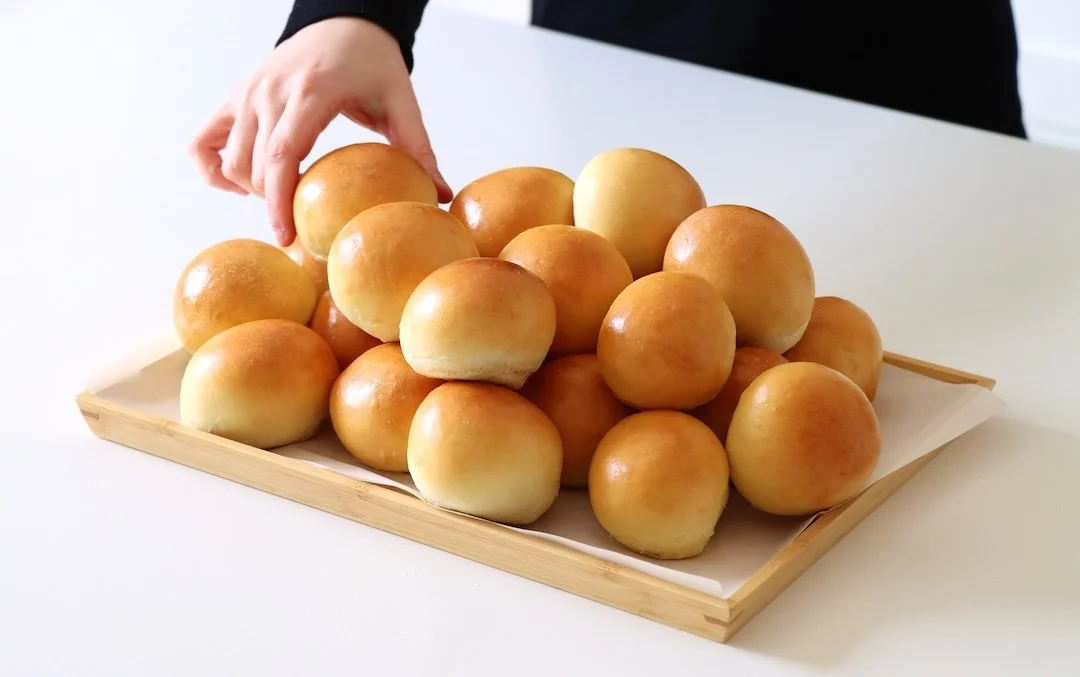

Hi! I’m Emma Fontanella. Here you’ll find trusted, tested recipes to satisfy your baking addiction and carb cravings. Learn more…
Tried one of my recipes? Please let me know on Instagram (@emmafontanella) or TikTok (@emma.fontanella)! Hashtag #emmafontanella
Search for another recipe…
