
Incredibly Soft Italian Pound Cake Recipe —
Ciambellone
Emma Fontanella’s Ciambellone — an incredible soft Italian pound cake
About This Incredibly Soft Italian Pound Cake
Ciambellone sits somewhere between a tea cake and an American pound cake. This simple vanilla cake recipe gives you a soft, buttery cake that is lightly sweet and gently scented with lemon.
It has the richness of a pound cake, but a softer, more melt-in-the-mouth texture. As a snacking cake, it works at almost any time of day.
Traditionally, this classic ring cake is served for breakfast (yes, Italians eat cake for breakfast!) or as an afternoon snack, with coffee, cappuccino, or tea. Its name means “big doughnut,” a reference to its shape: a round cake with a hole in the middle.
If you like this snacking cake recipe, you might enjoy the lemon pound cake recipe in my cookbook, Simple Pleasures, which has a whole chapter on snacking cakes.

In Italy, people love to dip ciambellone in coffee for breakfast, in a similar way to how the French dip croissants.
Why This Cake Works
Ciambellone is a simple cake to make, but its texture depends on getting the balance of butter, sugar, eggs, flour, and milk right.
It’s not a light sponge cake made mostly from whipped eggs, and it’s not quite a dense American pound cake either. It somewhere in between. It’s rich with butter, yet still soft and easy to slice.
The butter is the key to the cake’s tender crumb. It also carries the flavor of the vanilla and lemon beautifully, and helps the cake stay soft for days.
As well as sweetening the cake, the granulated sugar plays another crucial role. When the butter and sugar are beaten together, the sugar crystals create tiny air pockets in the softened butter. They act like thousands of tiny rough-edged spatulas, scraping through the butter and helping it trap air as it’s beaten.
Those air bubbles expand in the oven, helping the cake rise and giving it its soft, fluffy texture. This is why the creaming step matters so much.
The lemon zest acts as a background aromatic that gently scents the cake. Rubbing the zest into the sugar makes a real difference. The sugar crystals help draw out the lemon oils from the zest, so the citrus aroma disperses evenly through the cake.
What kind of flour should I use for ciambellone?
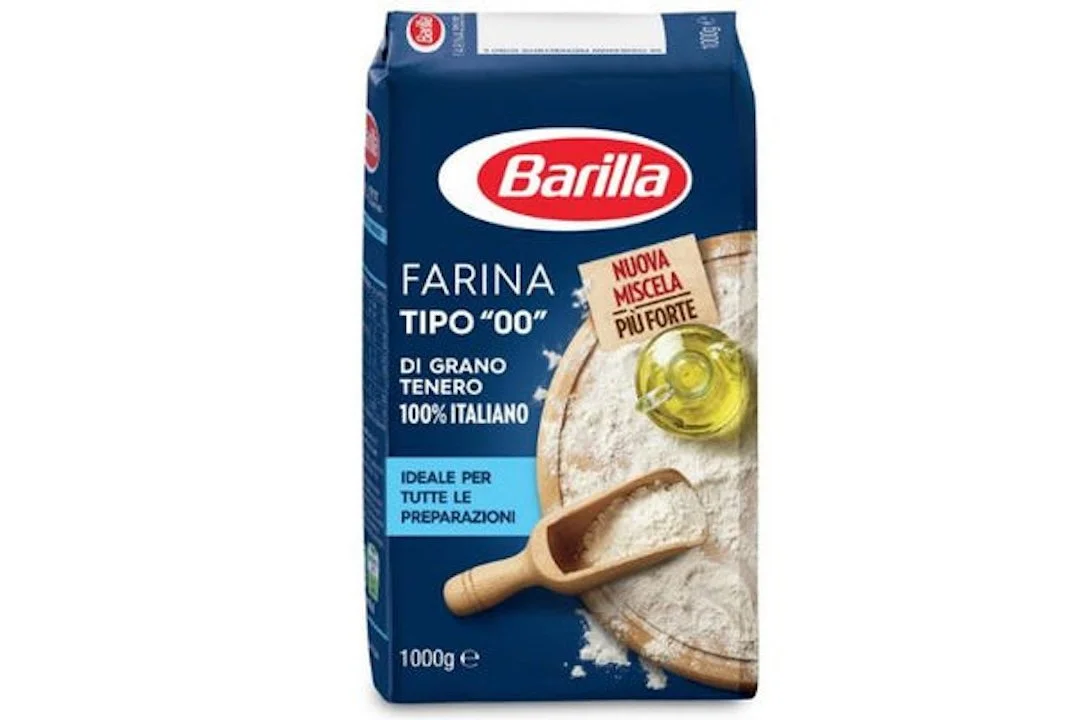
The ideal flour for ciambellone is an Italian Type 00 flour. I use this Barilla flour, but any Type 00 flour with low protein content will work well.
A finely milled all-purpose flour with relatively low gluten content works well for this cake. A Type 00 Italian flour is ideal. If you can’t find a flour like this, the cake will work with any all-purpose flour.
If you want to take this cake to the next level, it’s worth considering the option below.
To make the ciambellone even softer, you can substitute some of the flour with potato starch or cornstarch. Potato starch works particularly well here, and is the traditional option for this cake in Italy. It gives the cake an extra-velvety, moist crumb.
The standard recipe calls for 2¾ cups (390g) of all-purpose flour. To use the starch option, instead use 2⅓ cups (330g) of all-purpose flour and ½ cup (60g) of potato starch or cornstarch.
Making cakes using a bundt pan
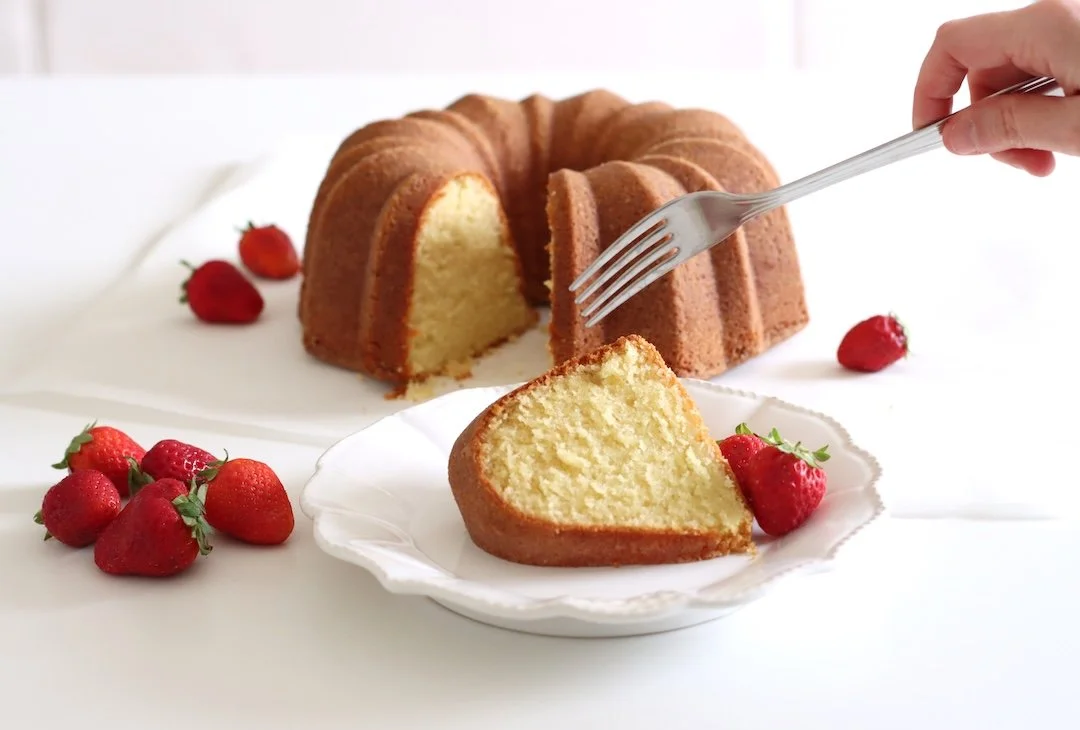
When you use a bundt pan to make this Italian version of a pound cake, it’s important to use a homemade pan release mixture known as “cake goop”. This ensures the cake comes out of the mold without sticking.
Because we’re using a bundt pan for this cake, we need to make sure the cake releases from the pan with any sticking. That way we’ll achieve the precise shape we’re aiming for. To do that, we use what’s known as “cake goop”.
What is cake goop?
Cake goop is a homemade pan-release mixture made with equal amounts by volume of fat and flour e.g., 2 tbsp each of melted butter and flour. I prefer to use butter for the fat, but you can use vegetable oil. It’s highly effective and ensures cakes, especially those in intricate bundt pans, release perfectly without sticking
How long does cake goop last in the fridge?
Homemade cake goop lasts for a long time. If you have some left over, store it in an airtight container in the fridge. If you use butter to make the goop, it will last 3 months; if you use oil, it will last 6 months.
INGREDIENTS
For the cake goop
2 tbsp (30g) unsalted butter, melted
2 tbsp (20g) all-purpose flour, plus extra for dusting
For the cake
2¾ cups (390g) all-purpose flour *
* See section above, “What kind of flour should I use for ciambellone?” for adding starch to lighten the flour
1½ tsp baking powder
¾ tsp (5g) salt
2 cups (400g) white granulated sugar
zest of 1 lemon
3 sticks (1½ cups / 345g) unsalted butter, cut into cubes and at room temperature
2 tsp vanilla extract
5 eggs
¾ cup (180g) milk
Equipment
A 9½ inch (24cm) wide, 3½ inch to 4½ inch (10cm) deep non-stick bundt pan or smooth tube pan
Stand mixer or hand mixer
Mixing bowls
Spatula
Toothpick or skewer
Wire rack
INSTRUCTIONS
1. Prepare the pan
Preheat the oven to 340°F (170°C).
Grease a bundt pan or tube pan very thoroughly. For the most reliable release, make the “cake goop”. Mix the melted butter with flour to make a loose paste, then spread it generously over the inside of the pan, making sure to get into every ridge and corner.
Dust the pan with extra flour, rotate it so the flour coats the whole surface, then shake out the excess. This is especially important if using a detailed bundt pan.
You might have some cake goop left over. If you do, store it in the fridge (see the section “How long does cake goop last in the fridge?” above).
2. Mix the dry ingredients
In a bowl, whisk together the flour*, baking powder, and salt. Set aside.
* Or you can use mix of flour and potato starch / cornstarch. For quantities, see section above, “What kind of flour should I use for ciambellone?“
3. Rub the lemon zest into the sugar
Place the sugar in the mixer bowl. Grate the lemon zest directly over the sugar, then rub it in with your fingers. This releases the lemon oils and gives the cake a gentle lemon aroma rather than a strong citrus flavor.
4. Cream the butter, sugar, lemon, and vanilla
Add the softened butter and vanilla extract to the sugar.
Beat on medium-high speed for at least 3 minutes, until the mixture is pale, light, and fluffy. This step is important because much of the cake’s softness comes from the air beaten into the butter and sugar.
5. Add the eggs
Add the eggs one at a time, mixing just until each egg is incorporated before adding the next.
The mixture may look slightly curdled at this stage, especially if the eggs are cold. That is normal. It will come back together once the flour is added.
6. Add the flour mixture and milk
Add about half of the dry ingredients and half of the milk. Mix on low speed until mostly incorporated.
Add the remaining dry ingredients and remaining milk, then mix again just until a thick, smooth batter forms. Scrape down the sides and bottom of the bowl to make sure everything is evenly combined.
Do not overmix, or the cake may develop dense or gluey streaks.
7. Fill the pan
Spoon the batter into the prepared pan in batches. Because the batter is thick, smooth it down as you go to avoid large air pockets.
Run a knife gently through the batter to help distribute it evenly, then smooth the top.
8. Bake
Bake for about 1 hour 10 minutes, or until a toothpick inserted into the centre comes out clean.
If the cake begins browning too much before it is fully baked, loosely cover the top with aluminium foil.
If you want to use an instant read digital thermometer to check when the cake is ready, pull the cake out of the oven when the internal temperature of the cake reaches 205–208°F (96-98°C).
9. Unmold
Let the cake rest in the pan for 5 minutes only. Do not leave it much longer, or the bottom may become soggy.
Place a wire rack or baking tray over the pan, then carefully flip the cake over using oven gloves. Tap the pan gently if needed, then lift it away.
10. Cool and serve
Let the ciambellone cool for at least 20 minutes before slicing. It is especially good slightly warm, but it also keeps well for several days.
Storage
Keep the cake covered at room temperature. It should stay soft and moist for several days, making it ideal for breakfast or snacking throughout the week.
Make Ahead & Freeze
The best way to freeze the cake is to slice it into individual portions and freeze those. This allows you to thaw only what you need without defrosting the whole cake which you won’t be able to refreeze.
One the cake is completely cool, slice it into individual portions. Wrap each portion tightly in plastic wrap. Place all the wrapped slices in a ZipLock freezer bag, and squeeze out as much as as you can without squashing the cake. It will keep well for up to 3 months.
To defrost, put the slices still wrapped in the fridge the overnight. Then allow it to finish defrosting at room temperature on the countertop. This will give you the best texture.
If you want to freeze the whole cake, wrap it tightly in two layers of plastic wrap, and then a layer of aluminum foil. Freeze for up to 3 months. Defrost in the fridge overnight, wrapped. Then on the countertop to finish defrosting.
Watch the video for more tips

Hi! I’m Emma Fontanella. Here you’ll find trusted, tested recipes to satisfy your baking addiction and carb cravings. Learn more…
Tried one of my recipes? Please let me know on Instagram (@emmafontanella) or TikTok (@emma.fontanella)! Hashtag #emmafontanella
Search for another recipe…
